Lake Nakuru has been one of Kenya’s most famous safari stops for decades, and its pink shoreline of flamingos made it a postcard image of East Africa. The lake nakuru safari why flamingos moved is not a simple story of birds leaving forever. It is a story about water, food, and the changing chemistry of a Rift Valley soda lake. Understanding it helps you plan a better Lake Nakuru safari, whether you focus your time on Nakuru or spread it across the lakes.
Lake Nakuru Safari Why Flamingos Moved: What Caused It?
Flamingos moved from Lake Nakuru mainly because rising water levels diluted the lake’s alkaline, saline chemistry and reduced the microscopic blue-green algae they eat. Heavy rainfall, catchment degradation, pollution and changing inflows contributed to the shift. The birds followed better feeding conditions elsewhere rather than abandoning Kenya permanently.
The lake sits in a closed basin. Water enters through rivers, runoff, and underground springs, and leaves mostly through evaporation. For many years the lake was shallow, salty and alkaline, conditions that supported dense blooms of spirulina, the blue-green algae lesser flamingos filter from the water.
Starting in the 2010s, the lake began to rise steadily. Longer rainy seasons and stronger storms pushed more water into the basin, diluting the salts and raising the water level. When salinity and alkalinity dropped, spirulina could not thrive in the same quantities. A deeper lake also meant less shallow feeding habitat, and flamingos feed best in shallow water.
Catchment degradation made things worse. Deforestation, agriculture and urban development around Nakuru changed the timing and quality of inflows, and pollution from farms and towns added nutrients that shifted the lake’s ecology. The birds responded to the conditions they could actually eat in, not to the lake’s reputation.
How Did Rising Water Levels Change Lake Nakuru’s Food Supply?
When Lake Nakuru became deeper and fresher, salinity and alkalinity fell, changing the conditions needed by flamingo-feeding algae. Deeper water also reduced access to shallow shoreline feeding areas. With less suitable algae and habitat, flamingos redistributed themselves among Rift Valley soda lakes where food and water chemistry were more favorable.
Stable flamingo numbers depend on a delicate balance. Lesser flamingos use their unusual bills to filter tiny organisms from the water. In Lake Nakuru, the key organism is spirulina, an algae that grows best in warm, shallow, highly alkaline conditions.
The rise in lake level changed that equation. More sediment and fresh water lowered the concentration of salts, so algae blooms became less predictable and less dense. Deeper water also meant that even when algae appeared, flamingos could not always reach it. Their legs are long, but they feed in water only a few centimeters deep.
Scientists and park managers also noted that flooding submerged shoreline vegetation and changed nesting and loafing sites. The result was a lake that looked more dramatic, but offered less of the food that once made it a flamingo magnet.
Where Did Lake Nakuru’s Flamingos Move To?
Many flamingos shifted to Lake Bogoria, whose hot, alkaline water gives more dependable feeding conditions. Others use Lake Elementaita, Lake Magadi or Lake Natron in Tanzania, depending on food, water levels and disturbance. These lakes form a connected network rather than isolated destinations.
Lake Bogoria, in Baringo County, is widely regarded as the most reliable Kenyan lake for substantial flamingo gatherings. It is a narrow, hot lake with intense alkalinity and plenty of shallow margins, conditions that let spirulina bloom even in drought years. The birds gather there in numbers that can rival Nakuru’s famous historical flocks.
Lake Elementaita, closer to Nakuru, also holds flamingos when water levels and food allow. It is shallower and can dry out during severe drought, so flamingos move between Elementaita and Nakuru as conditions change.
Lake Natron, across the border in Tanzania, is the main breeding site for East Africa’s lesser flamingos. It has harsh shores and seasonal nesting areas, and its saline water and remote location provide some protection from disturbance.
Lake Magadi, south of Nairobi, is another soda lake that can host flamingos, though its industrial use and extreme temperatures make it less predictable for visitors. These birds are not tied to one lake. They fly between them, sometimes daily, and settle where the food is.
Are There Still Flamingos in Lake Nakuru?
Yes, flamingos still visit Lake Nakuru, but their numbers fluctuate and the lake no longer reliably holds the enormous flocks associated with its past reputation. Birds can return when shallow areas and algae improve, so a safari may still produce sightings, but visitors should treat flamingos as seasonal and unpredictable.
If you drive around the lake on any given day, you may see small groups of flamingos near the shoreline, or hundreds after a period of favorable conditions. What you are unlikely to see, for now, is the continuous pink carpet older guidebooks describe.
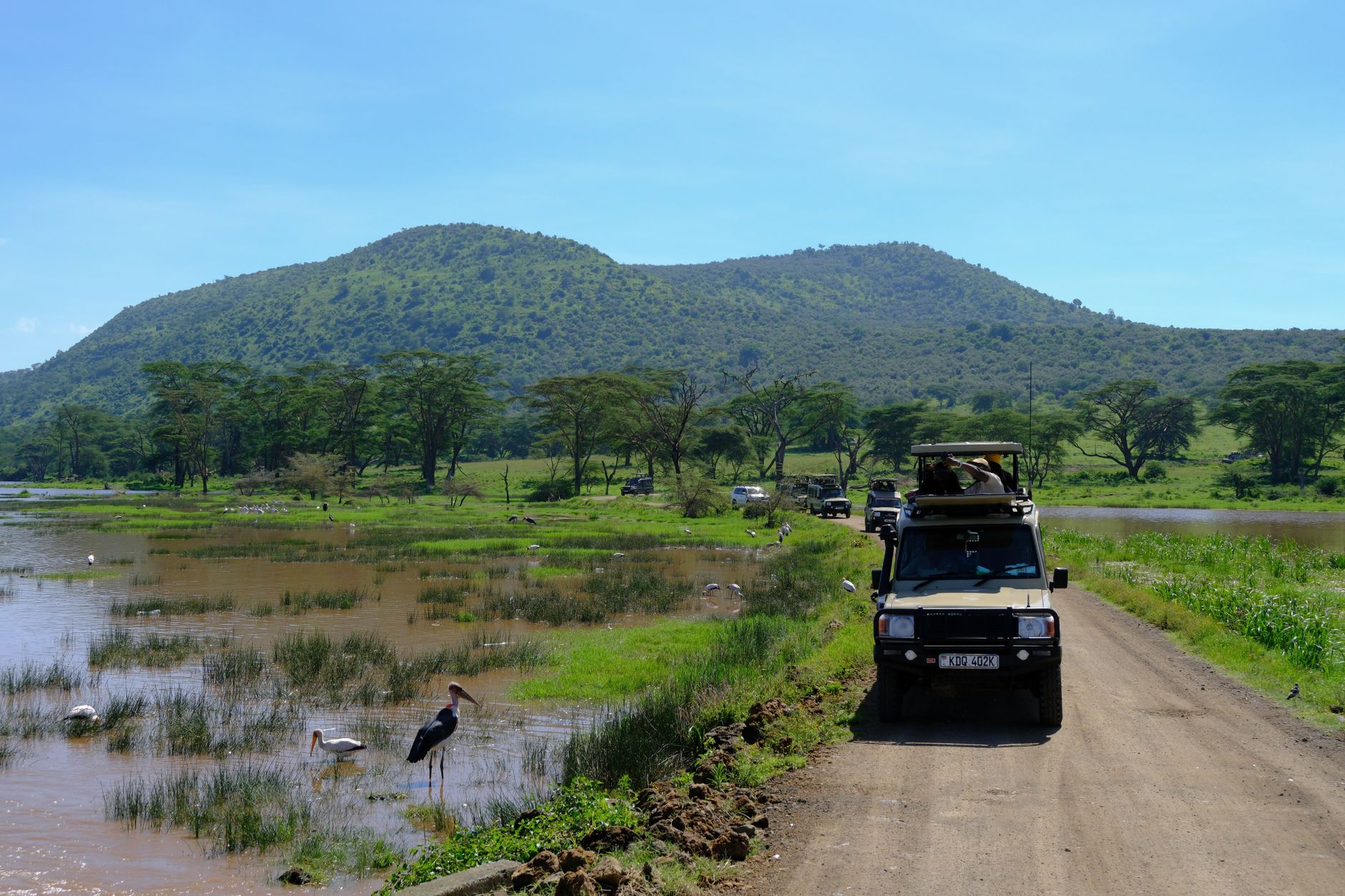
The park’s other wildlife is not affected by the flamingo shift. Lake Nakuru National Park remains an important sanctuary for both black and white rhinos, with buffalos, giraffes, zebras and lions in the surrounding woodland and grassland. The lake itself attracts pelicans, cormorants, herons, ibises and many other waterbirds, so a safari here is still worthwhile for rhino viewing and general bird diversity.
The uncertainty about flamingos is part of conservation in a changing climate. A good safari operator can check recent local conditions and advise whether a stop at Nakuru or a longer drive to Bogoria fits your goals.
What Does the Flamingo Shift Mean for Safari Visitors?
A Lake Nakuru safari remains worthwhile, but flamingos should not be the only reason to visit. The park still supports important rhino habitat and diverse waterbirds, while the flamingo shift reflects altered rainfall, deforestation, runoff and pollution. For larger flamingo concentrations, Lake Bogoria may offer better odds.
For photographers, the changing lake creates new opportunities. The shoreline often attracts pelicans and other birds that feed in the fresher water, and the views from the Baboon Cliff area remain dramatic. But if your main goal is a dense flamingo flock, your time may be better spent in Bogoria.
The comparison below lays out what you can expect at the main Rift Valley lakes. Use it as a starting point, then check recent sighting reports with your operator.
| Lake | Water type | Flamingo reliability | Main safari draw | Typical travel time from Nakuru |
|---|---|---|---|---|
| Lake Nakuru | Alkaline, fresher since 2010s | Unpredictable, sometimes absent | Rhinos, waterbirds, easy drive | Base location |
| Lake Bogoria | Highly alkaline soda lake | Generally reliable, can be spectacular | Flamingos, hot springs, landscapes | About 2 to 3 hours |
| Lake Elementaita | Shallow soda lake | Variable, depends on water level | Flamingos, birdlife, nearby lodges | About 30 to 45 minutes |
| Lake Natron | Extremely alkaline, harsh environment | Major breeding site, seasonal | Lesser flamingo breeding, remote scenery | Full day or overnight via Tanzania |
The table gives indicative travel times based on normal driving conditions. Roads and weather can change these estimates, so confirm your route in advance.
When Is the Best Time to See Flamingos at Lake Nakuru?
There is no dependable month that guarantees large flamingo flocks because their movements respond to changing lake conditions rather than a fixed calendar. Ask your safari operator for recent sightings and consider Lake Bogoria if seeing substantial numbers is a priority.
That said, the drier months from late June to October often make the lake shallower and more concentrated, reducing the effect of sudden fresh water inflows. Some local guides report better flamingo numbers at Nakuru during these periods, but it is not a guarantee.
During the wet season, from November to May, the lake can rise quickly after heavy storms, and the fresher water can push flamingos away for weeks or months. The tradeoff is a greener park with improved wildlife viewing. If you travel after a wet spell, check local reports before committing to a lakeside day.
For many travelers, the best approach is combining a Nakuru stop with a Lake Bogoria visit. That way you see both environments and improve your odds of finding flamingos in the Rift Valley.
Which Lake Has the Most Flamingos in Kenya?
Lake Bogoria is currently regarded by many safari sources as the more reliable Kenyan lake for substantial flamingo concentrations. Numbers still change with water chemistry, food availability and season, so recent local reports remain more useful than a permanent ranking.
Bogoria’s value comes from its intense heat, high alkalinity and shallow margins. It is a harsh environment for most wildlife, but perfect for spirulina, and flamingos often remain there for months at a time.
Lake Natron, over the border in Tanzania, matters more as a breeding site. Flamingos travel there to nest when conditions are right. But the lake is remote and hard for casual visitors to reach, so it is not the best place to photograph large flocks.
The practical answer for a Kenya safari is usually Lake Bogoria. It combines a strong chance of seeing flamingos with geysers and hot springs along the shoreline. Roads from Nakuru are decent, though a 4×4 helps in wet weather.
Frequently Asked Questions
Why Did the Flamingos Leave Lake Nakuru?
Rising water diluted the lake’s salty, alkaline chemistry and reduced the blue-green algae flamingos feed on. Climate variability, catchment degradation and pollution added to the shift, so the birds moved to lakes with better conditions.
Where Have the Flamingos From Lake Nakuru Gone?
Most have shifted to Lake Bogoria, with some using Lake Elementaita, Lake Magadi and Lake Natron in Tanzania. The destination changes with algae, water depth, breeding conditions and disturbance.
Are There Still Flamingos in Lake Nakuru?
Yes. Numbers vary considerably and the birds may be present only temporarily. Sightings are more likely when shallow feeding zones and algae return, so no safari can guarantee the old concentrations.
When Is the Best Time to See Flamingos at Lake Nakuru?
No month guarantees large flocks, since movements track lake conditions rather than a fixed calendar. Ask your operator for recent sightings, and consider Lake Bogoria if numbers are a priority.
Which Lake Has the Most Flamingos in Kenya?
Lake Bogoria is generally the more reliable Kenyan lake for large flamingo concentrations. Numbers still shift with water chemistry and season, so recent local reports beat any permanent ranking.
How Do You Plan and Compare Safari Operators for This Trip?
A Lake Nakuru safari still belongs on many Kenya itineraries, but plan around the reality of the flamingo situation. Add Lake Bogoria as a flexible extra stop if flamingos are a priority for you. Ask your operator to check recent lake conditions before you travel, and stay ready to adjust your route based on the latest sightings.
The shifting flamingos fit into the wider rhythm of Kenya’s safari year. If you are planning around weather and crowds, it helps to understand Kenya’s shoulder season wildlife patterns. They affect what you see at Nakuru and other parks. The changing shorelines also create real wildlife photography opportunities even when flamingo numbers are low. If you are weighing where else to go on the same trip, see how Tsavo compares with the Masai Mara before you finalize your route.
When you are ready to build your trip, browse packages from a few operators to compare safari operators and find one that matches your priorities. You can compare Lake Nakuru itineraries on FindMySafari, Valley Safaris, and Trunktrails Safaris to see how their routes and prices differ. Look for local guides who keep current on the Rift Valley lakes. That local knowledge is what separates chasing a rumor from standing in front of a real flamingo flock.
For broader route planning, the best time to visit Kenya map from SafariPure is a useful reference once you look beyond Lake Nakuru.